


Visit Us
We care for more than 23,000 sites in 150 countries and territories around the world. From individual burials to huge, constructed cemeteries and memorials, each site combines carefully chosen horticulture and architecture to commemorate each of the 1.7 million commonwealth dead of the two world wars.
Each of our sites across our global estate share the same DNA, each carefully crafted to ensure a respectful atmosphere for our visitors. Each of our constructed sites follows the same ethos laid down during our early years in the Kenyon Report (1918) and built upon by architects like Lutyens, Baker, Blomfield, Holden, and developed through more than 100 years of experience as a global leader in commemoration.
Visitors to our sites in the UK, such as Brookwood Military Cemetery, across the western front, and around the world will all experience the same level of care, dedication and commitment to commemoration.
Find a site near you or plan a visit to one of our iconic cemeteries and memorials around the world. Want to learn more about our work? Then explore our history and what it means to commemorate the war dead today, at our Beaurains Visitor Centre.
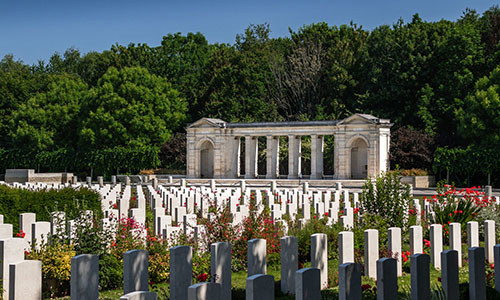
Visit our sites
Explore your local area or plan a trip to the battlefields.

Our French Visitor Centre
Learn more about our work by visiting us in France

Visit us in Belgium
Explore the battlefields of Flanders and learn about our iconic sites.
At a Glance – What You Can Do at CWGC Sites
Whether you are hoping to commemorate a particular casualty, or just want to explore the history on your doorstep, each of our 23,000 cemeteries and memorials across 150 countries contain a wealth of information:
- Explore each site using our mobile apps – available on Apple and Android devices – to learn more about the historical context of each site and the men and women commemorated there.
- Investigate headstones and memorial panels to learn more about the casualties. Headstones and panels hold valuable information about each casualty, from names, regiments, medals, and personals inscriptions, helping our visitors to learn more about their stories.
- Follow the history of the battlefields through our sites. You can follow the path of battle through the positions of our cemeteries and memorials – follow the first day of the Battle of the Somme, the Invasion of Normandy and the battles that ebbed and flowed around Ypres by following in the footsteps of the men who fought and died there.
- Meet some of our colleagues and learn more about what it takes to commemorate 1.7million Commonwealth men and women around the world at our award winning CWGC Visitor Centre in Beaurains and Ieper Visitor Centre.
- Learn more about how the architecture of our sites is designed to represent the men and women we commemorate. For example, visitors to our naval memorials at Plymouth, Portsmouth and Chatham can discover design cues taken from Trafalgar Square, paying tribute to the UK’s long naval tradition.
- Discover more about the steps being taken to right historic wrongs and ensure equality in commemoration around the world.
- Explore our records to find a particular casualty – you’ll be able to find more about where they are commemorated, how to find them within a site, and archive grave registration documents.
- Changing climates mean changes to our sites. Visit our sites around the world to find out how we’re evolving. Many of our sites are undergoing changes, such as irrigation improvements and sustainable power initiatives – we’re also planting 39,000 trees for 2039 at sites across our global estate.
What Are Commonwealth War Graves?
Commonwealth war graves are the burial places and memorials cared for by the Commonwealth War Graves Commission. We commemorate 1.7million Commonwealth men and women of the two world wars who died while in service and more than 67,000 civilian casualties from the Second World War who are commemorated on the Civilian Role of Honour at Westminster Abbey.
Commonwealth war dead are those who died while in service for one of our member nations: Australia, Canada, India, New Zealand, South Africa and the United Kingdom, as well as auxiliary organisations and the merchant navy - all commemorated equally in our cemeteries and on our memorials around the world.
We are responsible for the commemoration of personnel who died between:
4 August 1914 and 31 August 1921 and
3 September 1939 and 31 December 1947
whilst serving in a Commonwealth military force or specified auxiliary organisation.
Personnel who died between:
4 August 1914 and 31 August 1921 and
3 September 1939 and 31 December 1947
after they were discharged from a Commonwealth military force, if their death was caused by their wartime service.
Commonwealth civilians who died between:
3 September 1939 and 31 December 1947
as a consequence of enemy action, Allied weapons of war or whilst in an enemy prison camp.
Find out more by reading our eligibility policies.
Types of CWGC sites – cemeteries, memorials to the missing, isolated graves, churchyard plots
Our cemeteries and memorials come in different shapes and sizes based on a number of factors, including the number of individuals commemorated, ownership of the land, and when and where the individual died.
- Isolated, or scattered, graves are one or two headstones on their own or found in a civil cemetery. For example, war dead who died at sea and were then buried when their ship stopped in a port, airmen who died when their plane crashed in a remote area, or soldiers who returned home and later died of their wounds.
- Churchyard plots are sections of churchyards or other burial grounds given over to the burial of war dead. We don’t own this land, but have good relationships with the owners, and our teams visit often for maintenance.
- Constructed cemeteries are cemeteries that were purpose built, near medical facilities, or were pre-planned – for example, during the invasion of Normandy, land was identified before the invasion for the burial of those who died during the opening days. This is now Bayeux Military Cemetery.
- Battlefield cemeteries were formed in the heat of battle, or in the days following, where war dead were buried almost immediately after battle. Some casualties who were buried in battlefield cemeteries were later moved to larger, constructed sites, if their initial burial place proved impractical to maintain.
- Memorials to the missing are places of commemoration to those who have no known grave. This may be because war dead were never recovered, such as if they died at sea, or their remains were found, but couldn’t conclusively be identified. Memorials to the missing play a vital role for families wishing to commemorate a loved one without a grave.
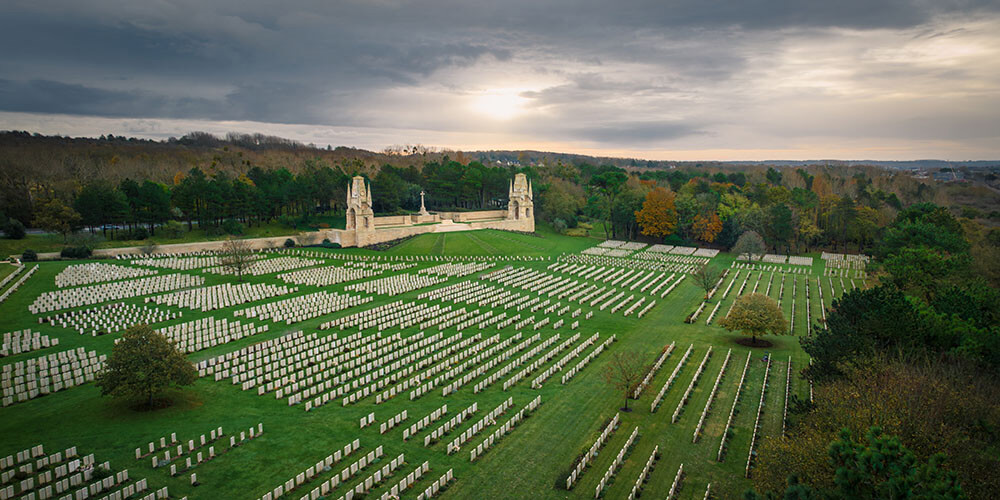
Plan Your Visit – Practical Guidance
We’re always happy to welcome visitors to our cemeteries and memorials – but if you’re planning to visit a CWGC site, there are some things to consider.
Firstly, our sites are open to all, but there may be times when the site, or parts of it, are closed while our maintenance and horticulture teams are at work. To avoid disappointment, check on our website to make sure that there aren’t any closure notices on the relevant cemetery page.
As always, keep an eye on the weather before your trip – depending on when you plan on visiting, our sites can be cold, wet and muddy. Some of our cemeteries have small shelters on site, but make sure you dress for the conditions and wear appropriate footwear.
Planning a visit? Our Visitors’ Guide is the perfect primer for a visit to any of our sites: A first-time visitor’s guide to CWGC cemeteries & memorials
What to expect on-site – etiquette, timings, what you’ll see
Most of our sites are open year-round, with some exceptions where we have plots on someone else’s site – such as National Trust properties. If you’re unsure, you’ll find visiting information on our website.
We welcome visitors bringing flowers and small mementos to our sites, but please be aware that our staff will tidy these away when they begin to look worse for wear. We also ask that our visitors do not attach anything directly to the headstones – these will be removed immediately.
Keep a look out for some of the key features of our sites. Larger sites will feature a Cross of Sacrifice and a Stone of Remembrance – key features that help create the atmosphere of respect and commemoration at our cemeteries and memorials.
The CWGC Visitor Centre at Beaurains – telling the CWGC story
If your visit has inspired you to find out more about our work round the globe, then plan a trip to our Beaurains Visitor Centre. You’ll find out more about the history of the Commission, our global estate, and the men and women who work to continue the commemoration of those we commemorate.
Plan a visit to our Beaurains Visitor Centre
Visit the CWGC in Ieper
Opposite the Menin Gate, you can visit our home in Ieper. Our Ieper Information Centre is a key stop on any visit to the battlefields of the First World War. Discover a range of information about our Ieper cemeteries and memorials, explore our gift shop, and stop for a cup of tea as you take a well earned break from touring the battlefields.
Visit our Menin Gate Visitor Centre
Guided tours, talks, and events – what’s available and how to book
Organisations, groups and schools can book guided tours of our sites, or organise a CWGC speaker to visit and provide a presentation on our work around the world. These talks and tours are volunteer lead. Each volunteer is highly trained and equipped, and all have a huge passion for sharing our work.
We also offer talks and tours for different special events, such as our annual War Graves Week and national events such as Heritage Open Days. Keep an eye out to see which events are happening near you.
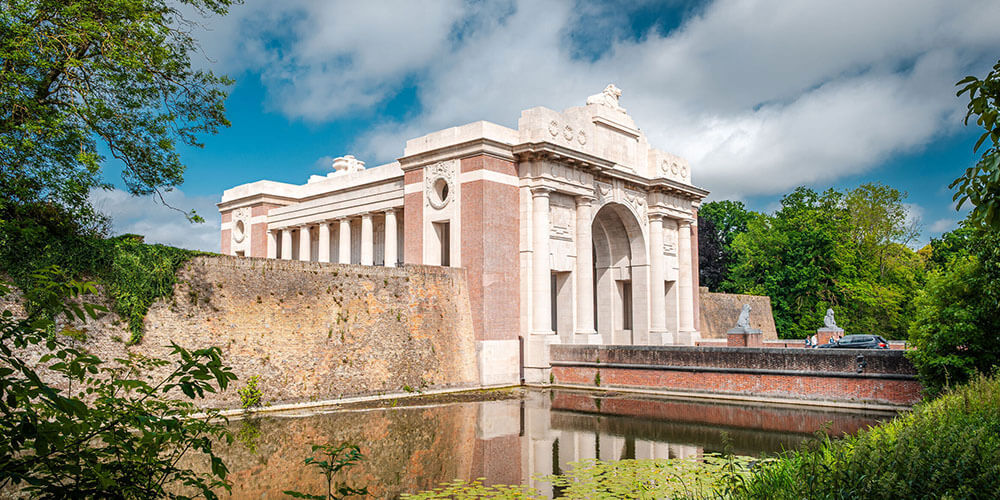
Where to Go – Destinations and Top Trails
Our global estate contains some 23,000 sites around the world. You can discover locations close to you, or explore our global estate using our site search tool.
Ypres and Flanders – Tyne Cot Cemetery, Menin Gate, Ypres Salient
Ypres, now known as Ieper, and the wider Flanders region of Belgium are the sites of some of the most well-known battles of the First World War, and some of our most well-known First World War memorials.
Fighting in the region lasted for the duration of the war, leaving the city of Ieper and the surrounding landscape scarred and destroyed. Today, visitors will find some of our most well-known cemeteries and memorials.
Ieper is home to the iconic Menin Gate Memorial to the Missing, an incredible structure that commemorates nearly 55,000 Commonwealth soldiers who lost their lives in the Ypres salient and have no known grave.
Nearby, is our largest cemetery – Tyne Cot Cemetery, where more than 11,000 Commonwealth servicemen are buried, although more than 8,000 are unidentified. Adjoining the cemetery is the Tyne Cot Memorial where just shy of 35,000 servicemen are commemorated.
Normandy – Bayeux War Cemetery, D-Day beaches, 1944 campaign
Normandy was the setting for one of the most famous moments of World War Two: D-Day.
You can follow in the footsteps of the invasion force, visiting Bayeux, the first major town to be liberated during the invasion. Here you’ll find Bayeux War Cemetery where more than 4,000 Second World War graves, and the Bayeux Memorial where more than 1,800 men of the 1944 campaign who have no known grave are commemorated.
Radiating out from Bayeux there are many other CWGC cemeteries to visit. Many make a special trip to Jerusalem War Cemetery, near the village of Chouain, where we commemorate the youngest Commonwealth casualty of D-Day. Private Jack Banks, who had lied about his age to join up, was killed during the fighting and is buried here. He was just 16 years old.
Beyond the western front – Gallipoli, Italy, East and North Africa, Pacific campaign
We have cemeteries and memorials in more than 150 countries and territories about the world. Wherever Commonwealth servicemen and women fought and died, you’ll find the CWGC.
- Gallipoli was one of the biggest campaigns of the First World War but was a costly failure. More than 44,000 servicemen from across the Commonwealth were killed during the campaign and our commemorated at cemeteries and memorials across the peninsular. The largest Gallipoli memorial is Helles Memorial, where more than 20,000 Commonwealth servicemen are commemorated.
- Italy is home to more than 120 CWGC cemeteries and memorials from both world wars. Fighting in Italy in World War Two came into focus as the Allies looked to open a second front in the ‘soft underbelly’ of Europe. The campaign was anything but soft, exemplified by the brutal battle for Monte Cassino, where Allied forces attempted to break through the German mountain defences. Designed by Louis de Soissons, Cassino War Cemetery contains more than 4000 Commonwealth burials of the battle, with a further 4,000 casualties of the Italian campaign commemorated on the Cassino Memorial.
- Important parts of both world wars played out across Africa. In the First World War, British and German holdings in East Africa were in direct conflict, with major battles fought throughout the war. In World War Two, North Africa was a vital battleground, with major tank battles across Libya and Egypt. Some of our biggest cemeteries in Africa include El Alamein, Dar Es Salaam and Nairobi, as well as our newest memorial, unveiled in January 2024, the Cape Town Labour Corps Memorial.
United Kingdom – Brookwood Military Cemetery, local war graves, UK interactive map
No matter where you are in the UK, if you travel past a churchyard, civil cemetery or burial ground, you’re very likely to see a small green sign advertising the presence of a CWGC war grave.
Many of these will be small numbers of individual burials, service men and women who made it home, just to succumb to their war wounds, but you’ll also find larger plots within cemeteries and some large, constructed cemeteries and memorials.
Our largest cemetery in the UK is Brookwood Military Cemetery. Originally formed in 1917, Brookwood is a 37-acre site that contains more than 5000 burials of both world wars, including Commonwealth burials alongside French, Czech, Polish, Belgian and a number of other nationalities.
Discover the history on your doorstep and explore our sites around the UK
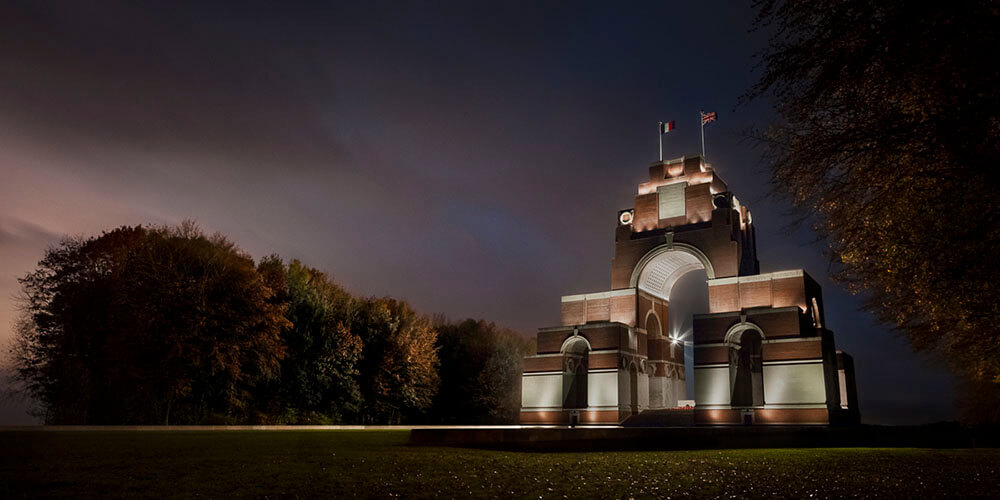
The Somme – Visiting the 1916 Battlefields
The Battles of the Somme are almost synonymous with the First World War.
On 1 July 1916, a series of simultaneous attacks were made by British Empire and French forces along the front lines in the Somme region of France – an attempt to break the stalemate on the Western Front.
The Somme offensive met incredibly fierce resistance from the German Army, which huge losses on both sides. On the first day alone, the British Army suffered more than 57,000 casualties – of whom 19,000 had been killed – the bloodiest single day in British military history.
The battle would continue through to November until the onset of winter made the fighting all but impossible. On both sides, hundreds of thousands of soldiers were captured, injured or killed.
The Battle of the Somme – what happened and why it matters
One of the key aims of the battle was to relieve pressure on the French forces at Verdun. By attacking in strength, across a long front, British military commanders hoped to force the German military to withdraw or reposition their forces away from Verdun.
The battle came to epitomise the high cost, low reward, trench fighting of the First World War. It revealed the devastating cost of the war and would shape military tactics throughout the rest of the conflict.
The first day of the Battle of the Somme is a defining moment in the war. It is the bloodiest day in the history of the British army, which devasted many communities when ‘Pals Battalions’ – units drawn almost entirely from single towns or regions – took heavy loses.
Thiepval Memorial – over 72,000 names
Sitting high on a ridge above the battlefields of the Somme, Thiepval Memorial to Missing is our largest memorial anywhere in the world, and one of the most significant First World War memorials in France.
It commemorates more than 72,000 British and South African war dead who died in the Somme sector and who have no known grave. Over 90% of these servicemen died between July and November 1916.
The memorial also serves as an Anglo-French Battle Memorial in recognition of the joint nature of the 1916 offensive and a small cemetery containing equal numbers of Commonwealth and French graves lies at the foot of the memorial.
Key cemeteries – Serre Road, Caterpillar Valley, Pozières, Delville Wood
You can follow the path of the battle by following the location of our cemeteries across the Somme region. There are more than 450 cemeteries and memorials on the Somme. You can use our site search for Somme sites, or learn more about some of these key cemeteries and memorials:
- There are three Serre Road cemeteries cared for by the CWGC – the largest of which is Serre Road No. 2 which holds more than 7,000 Commonwealth burials of the First World War, mostly dating from 1916, nearly 5,000 of which are unidentified.
- Caterpillar Valley was the name given by the army to the long valley which runs West to East, past "Caterpillar Wood", close to Longueval village, east of Albert. The valley and some of the surrounding territories were captured during an attack on Bazentin Ridge in July 1916 during the Battle of the Somme. Caterpillar Valley Cemetery now contains more than 5,500 burials of that battle and later fighting in 1918.
- Pozieres is a small village that sits to the north-east of Albert. It was attacked and taken in July 1916 by a mixture of British and Australian forces, who then faced intensive German counter attacks into early August. Despite strong German efforts, Pozieres would remain in Allied hands until 1918, when a strong German offensive would eventually recapture the village. Pozieres British Cemetery contains 2,700 WW1 war dead, half of whom remain unidentified. The cemetery is enclosed by the Pozieres Memorial, which bears the names of over 14,000 casualties from the fighting in 1918.
- Delville Wood was captured by South African battalions in July 1916, who held off determined German counter attacks at great cost. The woods would eventually return to German hands, but fighting in the sector would continue throughout the war. Delville Wood Cemetery contains more than 5,500 burials and commemorations, predominantly of war dead bought in from smaller cemeteries in the sector.
Planning a Somme visit – routes, timing, what to see in a day
We’ve put together a Visitors’ Guide to the Somme, that will help you plan your trip to the battlefields of France.
We’ve broken the region down into sectors, so that you can visit some of our most well-known sites, such at the iconic Thiepval Memorial, but also some of our lesser known sites which help tell the story of the battles, and those who fought and died there. Don't forget to include a visit to our visitor centre at Beaurains (1 hour from the Somme) to learn more about our work on the Somme and across France.
Visitor Skills – Reading Memorials and Finding Names
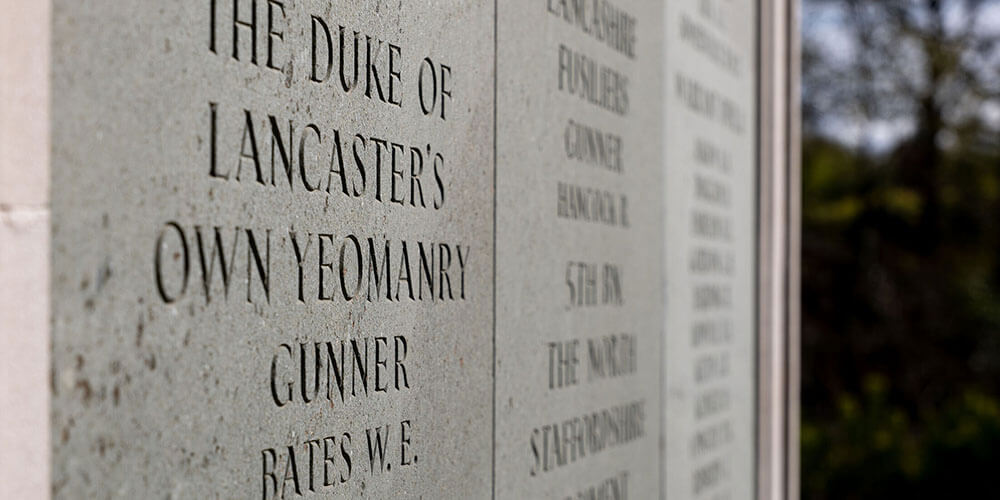
Learn more about exploring our cemeteries and memorials around the world. Discover how to read one of our memorials to the missing, and learn more about our iconic CWGC headstones, and what they can tell you about the men and women they commemorate.
How to read a memorial panel and find a name on site
Our memorials to the missing, especially those that commemorate a large number of war dead are an incredibly effective way of demonstrating the scale of loss of the two world wars. Finding a specific name on a memorial might be a difficult proposition were it not for the excellent memorial design and organisation put in place when our first memorials were being discussed.
The easiest way to find a specific name on a memorial is to visit our website, find a name before visiting and look at their ‘Buried or commemorated at’ information. You’ll see something like: “Buried or commemorated at YPRES (MENIN GATE) MEMORIAL, Panel 28.”
You can then access the webpage for the memorial and download the memorial plan, which will give you a diagram of the memorial and show where each specific panel is located.
Read our full guide on how to read a memorial panel
Understanding headstone inscriptions – badge, rank, name, unit, date, emblem, personal inscription
Our cemeteries around the world will sometimes use different types of markers depending on the size or location of the site.
The most common is our standard cemetery headstone. These are carved to a uniform height and shape, although there are some small differences to the keen observer.
Each headstone will display information about the casualty, depending on what we know about them, but can include: name, rank, nationality, medal record and a personal inscription chosen by the family. You may also see regimental insignia or religious emblems engraved on the stone.
Architecture and Design – Principles, Symbolism and Materials
When the CWGC was formed and attention turned to constructing cemeteries and memorials around the world, a number of key decisions had to be made. These decisions would outline the overarching principles of the Commission - from architecture and layout, to horticulture and aesthetics - and create blueprint that each of our sites would follow. These decisions were made in the Kenyon report.
"Although it is not desired that our war cemeteries should be gloomy places, it is right that the fact that they are cemeteries, containing the bodies of hundreds of thousands of men who have given their lives for their country, should be evident at first sight, and should be constantly present to the minds of those who pass by or who visit them.” Kenyon, 1918.
The Kenyon Report and founding principles of CWGC design
Sir Frederic Kenyon was the Director and Principal Librarian of the British museum. In 1917, he was tasked with reviewing architectural proposals for the design and layout of CWGC cemeteries, as well as consulting with various churches and religious bodies to ensure respectful and proper commemoration. He then submitted his finds to our then Vice-Chair Sir Fabian Ware.
The report codified many of the principles we will work to today, outlining the ethos of equality in commemoration, and the key design elements of our sites: stone walls, iron gates, registry boxes, shelter buildings and a central feature.
Four founding architects – Lutyens, Baker, Blomfield, Holden
When it came to designing the first CWGC cemeteries and memorials, some of the Empire’s most influential architects were approached.
Sir Reginald Blomfield, Sir Herbert Baker and Sir Edward Lutyens, later joined by Charles Holden, established the Commission’s aesthetic and were responsible for some of our most well-known and iconic sites.
Iconic design elements – Cross of Sacrifice, Stone of Remembrance, headstone design
Stone of Remembrance
In the Kenyon report, it was recommended that a “central monument” be placed in cemeteries and at memorials: “it should be simple, durable, dignified and expressive of the higher feelings with which we regard our dead.”
Lutyens’ suggestion was "one great fair stone of fine proportions, 12 ft. in length, lying raised upon three steps, of which the first and third shall be twice the width of the second; and that each stone shall bear, in indelible lettering, some fine thought or words of sacred dedication."
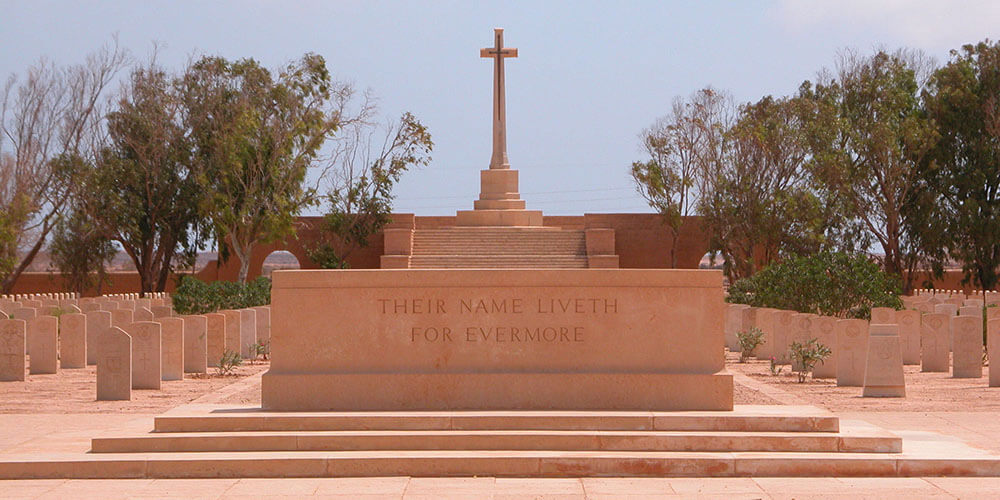
Visitors to our sites will have seen a stone that matches this description. Engraved with Rudjard Kipling’s words, “Their name liveth for evermore”, the Stones of Remembrance are an enduring feature of our cemeteries and memorials around the world.
As well as the famous engraving, the Stone of Remembrance also includes a design technique called Entasis – the top of the stone is a convex curve, which imbues the stone with a sense of solidity and permenance, a physical tribute to our mission of commemoration in perpetuity.
Cross of Sacrifice
Designed by Blomfield, the Cross of Sacrifice can be found in many of our larger sites. The cross was designed to represent the faith of the majority of the service men and women commemorated in our sites, but while the cross is a Christian symbol, the design can be symbolic of different faiths and religions.
The size of the cross varies between 4.4 metres tall to over 9 metres tall depending on the size of the plot it stands in, and features a bronze sword to represent the sacrifice of the fallen.
Headstone design
Few sites do more to highlight the scale of loss in the two world wars than seeing row on row of CWGC headstones in one of our cemeteries. An incredible amount of care, thought and passion went into their design.
A Headstone Commission was formed to create the design that’s so familiar today, including our Principal Architects, operation staff, National Gallery Director Charles John Holmes, and renowned graphic designer Leslie MacDonald Gill.
Ultimately a simple design was selected, featuring a smooth round top with a clear standard for the layout of information – including name, regiment, insignia and a personal inscription.
The design was intended to be neutral, allowing for the commemoration of different faiths and nationalities, and evoking the shared duty that would unite those buried at home and abroad.
Spotlights – Iconic and International Monuments
Tyne Cot Cemetery
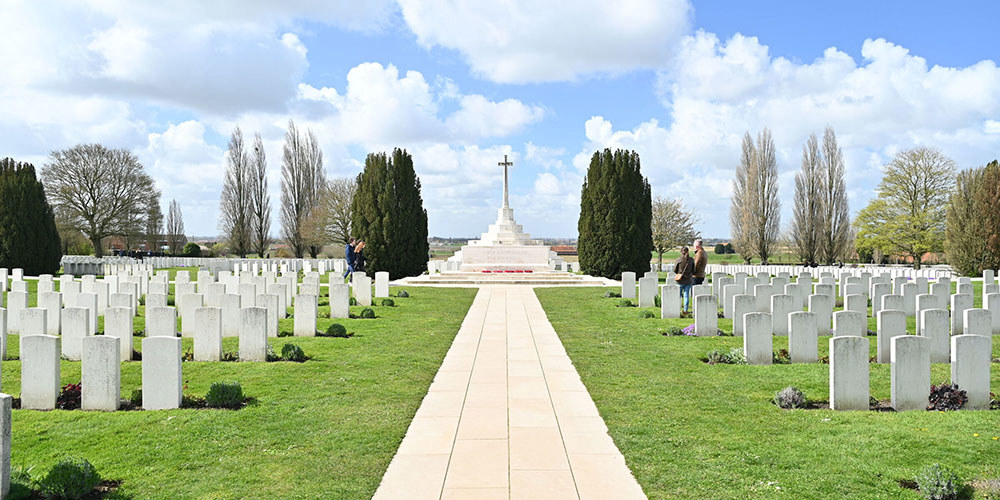
Our largest CWGC cemetery can be found on the Ypres salient. Tyne Cot Cemetery contains nearly 12,000 burials – around 8,000 of which are unidentified.
Designed by Herbert Baker, the site sits on the former battlefields and features four German pill boxes. The cemetery’s Cross of Sacrifice sits on top of the largest pillbox, purportedly at the suggestion of King George V, who visited the cemetery in 1922.
Menin Gate
The Menin Gate in Ieper is probably our most well known memorial to the missing.
Bearing the names of more than 54,000 Commonwealth servicemen, it commemorates those who fell during the near constant fighting around Ieper, then Ypres, and who have no known grave.
Each night, beneath the memorial, visitors can join the Last Post ceremony, where towns people and visitors gather to pay tribute to the fallen of the First World War.
International monuments – Delhi Memorial, Singapore Memorial, Delville Wood
We maintain a number of memorials around the world that can fulfil different objectives, as well as being memorials to the missing, they also become national memorials, representing each of the fallen of a nation – a shared location for commemoration and remembrance.
- India Gate, also known as the Delhi Memorial, is the national memorial of India, commemorating the 70,000 soldiers of Undivided India who died between 1914 and 1921. We commemorate 13220 of these casualties who died during the First World War.
- The Singapore Memorial stands within Singapore’s Kranji War Cemetery. Unveiled in March 1957, the memorial bears the names of nearly 25,000 Commonwealth war dead who have no known graves, including those who died in operations in the region, while in captivity or in the air during operations over the whole of southern and eastern Asia and the surrounding seas and oceans.
- The Delville Wood Memorial is a National Memorial to all South Africans of all theatres of war. It is included in the database and mentioned in records of the Commonwealth War Graves Commission by virtue of it being the only dedicated Memorial to South Africa's commitment on the Western Front. However, the names of their Missing are not inscribed on its walls. They appear on Commonwealth memorials alongside the Missing of the United Kingdom forces.
Brookwood Military Cemetery – CWGC’s Largest UK Site
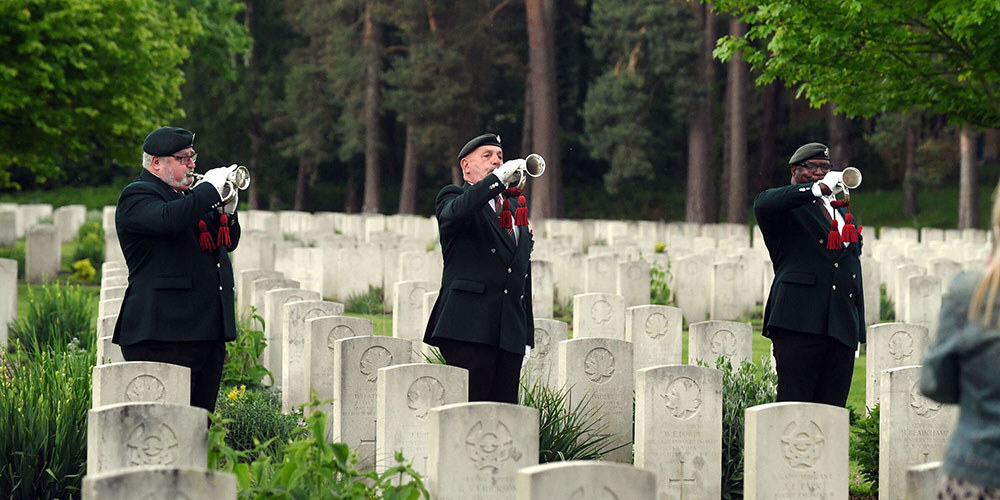
Covering approximately 37 acres, Brookwood Military Cemetery is the largest CWGC site in the UK. More than 5000 Commonwealth war dead are buried here, including servicemen and women from all six of our member nations.
Within the cemetery, you’ll also find the Brookwood 1939-1945 Memorial to the Missing, and our newly constructed 1914-1918 Memorial, which will be unveiled in 2026.
Brookwood Military Cemetery – history and significance
The civil cemetery at Brookwood was formed in the 1850s to address the growing need for burial space in London. The plan was to construct a large cemetery serviced by a dedicated railway line to and from London.
In 1917, land on the site was given over to the burial of Commonwealth and American service personnel who had died in the London area during the First World War.
It was extended during the Second World War, and today the Brookwood Military Cemetery contains around 1,600 Commonwealth burials of the First World War, and nearly 3,500 burials of the second. There are also burials of other nations, including French, Czech and Polish casualties, and an American section cared for by the American Battle Monuments Commission.
The new Brookwood 1914–1918 Memorial – a memorial reimagined
We’re building a new 1914-1918 memorial to the missing at Brookwood.
The memorial will commemorate those who died in the United Kingdom and Ireland during the First World War and who have no known grave. Some of these casualties were commemorated on the previous 1914-1918 memorial, but the burial places of many of these casualties have since been found.
Today, thanks to research conducted by the In From The Cold Project, there are many new names to be commemorated, and the decision was taken to construct the new memorial.
Sustainability and heritage are woven throughout the design of the memorial. Low impact construction methods and a long-term ecological plan mean that this memorial will be preserved for decades to come.
The new memorial has been designed by Studio Wignall & Moore, working closely with internationally acclaimed landscape Architect Tom Stuart-Smith and will be set within a carefully landscaped environment that celebrates local biodiversity and supports wildlife. Plantings of wildflowers, pollinator-friendly planting, and thoughtfully managed green spaces will create a memorial forest for reflection and commemoration, as well as fostering a thriving habitat for flora and fauna.
Visiting Brookwood – practical guidance, opening hours, getting there
Brookwood is in Surrey, England, about 30 miles from London.
Its accessible via the M3 to Bagshot and then A322, following the post code GU24 0JB. There is a small amount of parking available on site.
There is also a direct train from Waterloo to Brookwood station, where the is an entrance to the cemetery.
Brookwood Military cemetery is open between 0800-1930 weekdays, 0900-1930 weekends and bank holidays, and closed on Christmas Day and New Years Day.
Read our guide to Brookwood Military Cemetery
Photography and Community – Capturing Sites Respectfully
We always encourage visitors to take photos of our sites to keep a memory of their trip and to share it across social media – you can also enter the CWGF annual Calendar Competition to get your work featured in our calendar.
Photography walkthrough: capturing architecture respectfully
Whenever you visit our sites, please always be respectful of the headstones and memorials, our planting and horticulture, and fellow visitors and staff visiting at the same time as you.
Do not photograph other visitors without their permission and do not interrupt or interfere with any commemorative events or maintenance work happening on site.
Some tips for taking great photos in our sites:
- Sunrise and sunset are great times to take photographs – make the most of that golden hour light.
- Take advantage of the seasons – as the horticulture changes throughout the year your photos can change too. Compare blossoming trees in spring with the reds and oranges of autumn.
- Experiment with angles – a low angle shot of a headstone or memorial gives a sense of gravitas, while a wide shot gives a sense of scale and sets the scene.
- Natural framing – either through architecture or horticulture – can add visual interest to photographs and help you highlight a specific subject.
Sharing your visit – social media and respectful engagement
If you post you photography on social media, please do tag us. We have accounts on Facebook, Instagram, X and Linkedin, and we’re always grateful to see great photos of our sites.
Remember to be respectful when you post – avoid playful language or captions that trivialise the site, and instead post with a caption that reflects remembrance, history or learning.
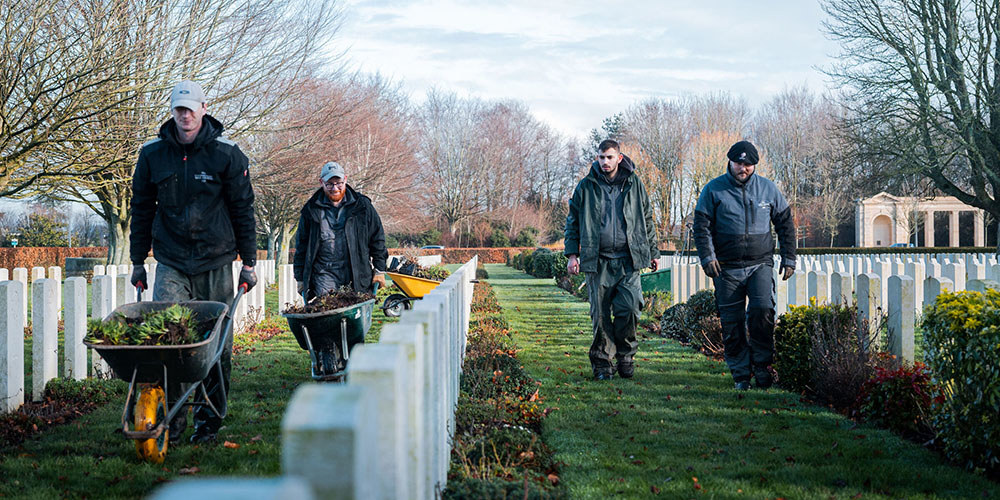
Horticulture and Sustainability – 39,000 Trees for 2039
We’re planting 39,000 trees for 2039 at our cemeteries and memorials across our global estate.
This project is designed to cultivate a healthy, climate resistant environment at our sites around the world, while maintaining the heritage and horticultural diversity we’ve been the custodians of for more than 100 years.
Overview and goals of the 39,000 Trees for 2039 project
Our pledge is to plant 39,000 trees to help us capture more carbon and support natural habitats at our sites in more than 150 countries around the world.
Trees have always played a key role in the landscape of cemeteries and memorials across the globe – from the maples trees that line the Canadian section at Brookwood, to the centuries old yew trees at Tyne Cot and the Lone Pine at Gallipoli – our 900 strong team of gardeners and horticulturists have life times of experience caring for woodland on the 1,750+ acres in our global estate.
Right tree, right place: how species are chosen
Guided by our specialist horticulture teams and external experts from the like of Botanic Gardens Conservation International, The Tree Council, the Forestry Commission and Royal Botanic Gardens Kew, we’ve selected plots across the world that would benefit from the programme.
We’ve carried out a full assessment of our current tree stock and mapped out planning locations. Using Tree Plotter software, we’re able to gather data from around the world, including plant health and soil condition.
Using this data, we’ve implemented a ‘Right Tree, Right Place’ approach – allowing us to plant trees that will thrive today and will continue to thrive for decades to come.
FAQs - Heritage and Tourism
Commonwealth war graves are the points of commemoration for the 1.7 million Commonwealth man and women who died during the two world wars. We have more than 23,000 locations around the world, ranging from burials in our cemeteries around the world, but also our memorials to the missing which commemorate the fallen who have no known grave.
Our largest cemetery is Tyne Cot Cemetery on the Ypres Salient in Belgium. There are close to 12,000 burials in the cemetery, the vast majority of which are unidentified.
Our largest cemetery in the UK is Brookwood Military Cemetery in Surrey. At 37 acres, the cemetery contains more than 5,000 war dead from both world wars, including Commonwealth burials and burials of other nationalities, such as French, Czech and Polish war dead.
Our largest memorial to the missing is the Thiepval Memorial to the Missing of the Somme. With 72,000 names inscribed on its walls, the memorial commemorates those who fell during the battles of the Somme and who have no known grave.
Yes, our sites across Belgium and France are open year round and are free to visit. We always welcome those wanting to learn more about the world wars and those we commemorate.
We’ve created a full guide on how to read our memorials – discover what you need to know before your visit, how and why our memorial panels are designed as they are, and how to use memorial registers and plans to navigate the site.
Given the nature and the location of our global sites, accessibility levels will vary. Before you travel, check for relevant information and photography on our website, and if in doubt, contact our support teams.
Yes, photography is permitted at our sites – however please ensure that you are respectful of other visitors and the site itself, and no not climb on any of the features, or access private areas.
The Cross of Sacrifice is a feature of many of our sites around the world. A stone cross with a downward sword. Designed by Sir Reginald Blomfeld, the Cross of Sacrifice can range in size from 4.4 metres tall to just over 9 metres tall depending on the size of the site it sits in.
At our cemeteries and memorials that commemorate 1000 or more casualties. Designed by Sir Edwin Lutyens, they measure 3.5m long and 1.5m in height. Each stone is the same size, regardless of the size of the cemetery in which it sits.
The stone was designed using “entasis”, an architectural technique where the top is slightly curved. This gives the stone a feeling of solidity and gravitas.
It is inscribed with the famous words “Their Name Liveth For Evermore” chosen by our then literary advisor Rudyard Kipling.
The CWGC Non-Commemoration Programme had a clear mandate: to ensure all those who died in the world wars, no matter where they were, where they died or how they died are remembered equally.
In practice, this means that our historians are working with global and state archive materials to research and uncover missing names, understand casualty numbers and identify burials.
They then work with our operational experts, heritage staff and community engagement experts to consult with local communities, governments and institutions to decide on the most appropriate form of commemoration.
The new Brookwood 1914-1918 Memorial will commemorate those who died in the United Kingdom and Ireland during the First World War and who have no known grave.
Initially, 400 service personnel will be commemorated on the new memorial. As research progresses, additional names will be added, with space available for up to 1,200 names.
We are committed to planting 39,000 trees for 2039 at our sites around the world. It is part of our long term care and maintenance road map for our sites, helping to make them more climate resilient as well as forming part of our global pledge to capture more carbon and support more thriving habitats.
The first plantings have already taken place in France and Italy, with more on the way.
You can search for specific casualty details through our Find War Dead search tool, this allows you to search by name, as well as other options, such as regiment, medal history or cemetery.
You can also use our CWGC app to find cemeteries and memorials before you visit, and discover more about the people we commemorate there.