

Keren War Cemetery
- Country Eritrea
- Total identified casualties 406 Find these casualties
- Identified casualties from Second World War
- GPS Coordinates Latitude: 15.77273, Longitude: 38.43977
Please note
We recommend not visiting the Cemetery during the Monsoon Season, which tends to take place between May and September.
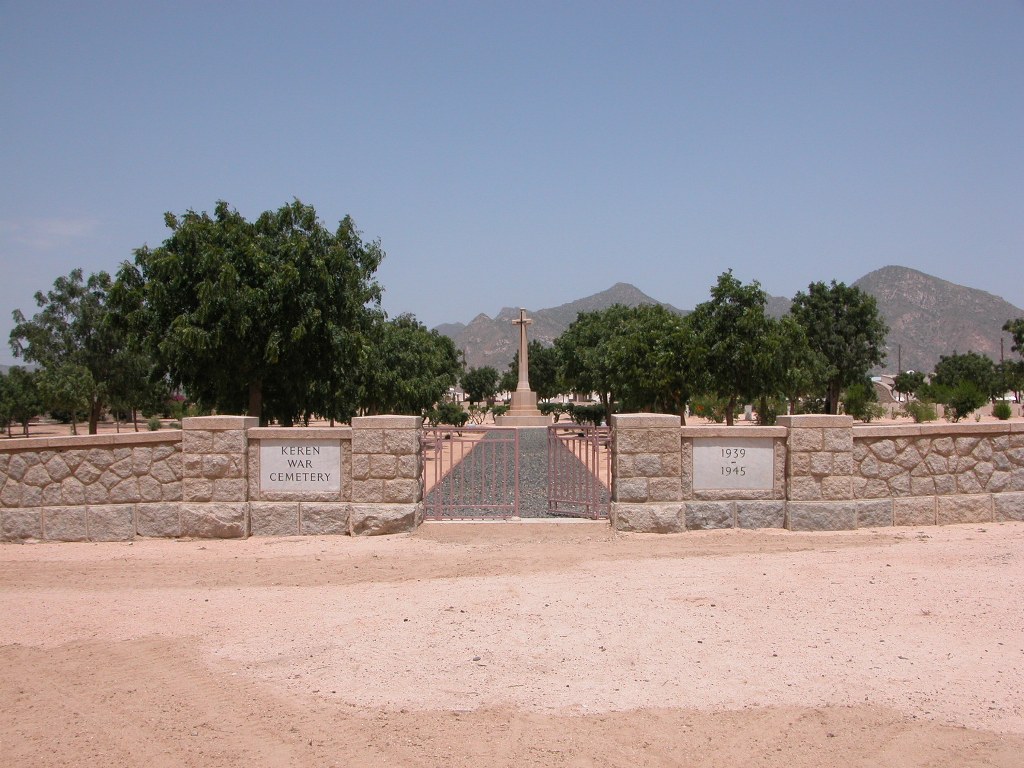


The country with two climates
Keren WAR CEMETERY
Location: Keren, Eritrea Language: Tigrinya, Tigre, Arabic Altitude: 1403m Rainfall: 411mm
Temperature: 18°c - 40°c Biggest challenge: Weather
For those unfamiliar with World War history or African geography, you could be forgiven for not being able to point to Eritrea on a map.
It sits on the Horn of Africa, north of Somalia, and was once the scene of fierce fighting in the Second World War. Men from around the world – Britain, Undivided India, South Africa and Sudan – assembled in a narrow mountain pass here in 1941.
The Battle of Keren was key to the Allies’ fight against the Italian occupiers in Eritrea. Tens of thousands of men from both sides fought across a steep gorge and mountain pass for control of the roads towards the city, and ultimately the route to the capital Asmara.
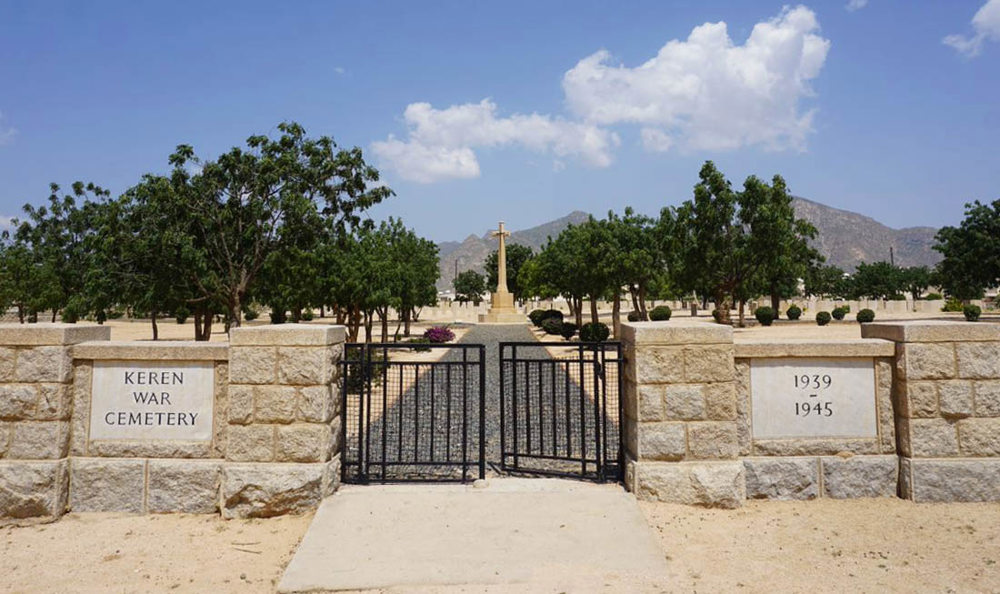
Keren War Cemetery was one of the very first new cemeteries built after the Second World War.
On the outskirts of the city stands the Commonwealth War Graves Commission’s (CWGC) Keren War Cemetery. One of the first to be built after the Second World War, it is almost entirely unaltered since it was constructed.
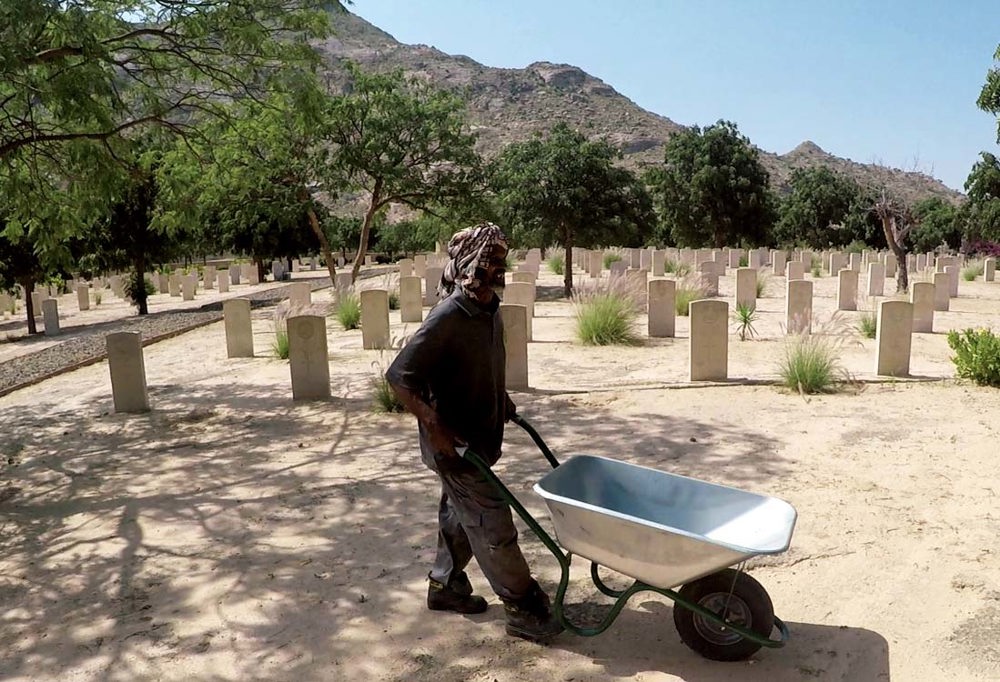
It stands as a permanent reminder of more than 700 Commonwealth men who died here. The tough conditions make it a little more challenging for CWGC’s local team to maintain the dotted horticulture that can survive the arid climate.
Despite the challenges, it remains a beautiful setting for the few visitors who can negotiate the visa process and stand here, in the peaceful shadow of the mountain ridges that so many men died fighting for control of.
Alongside rows of headstones is the Keren Cremation Memorial, a common feature where the Indian forces fought. Men who were cremated in accordance with their faith are remembered here by name.
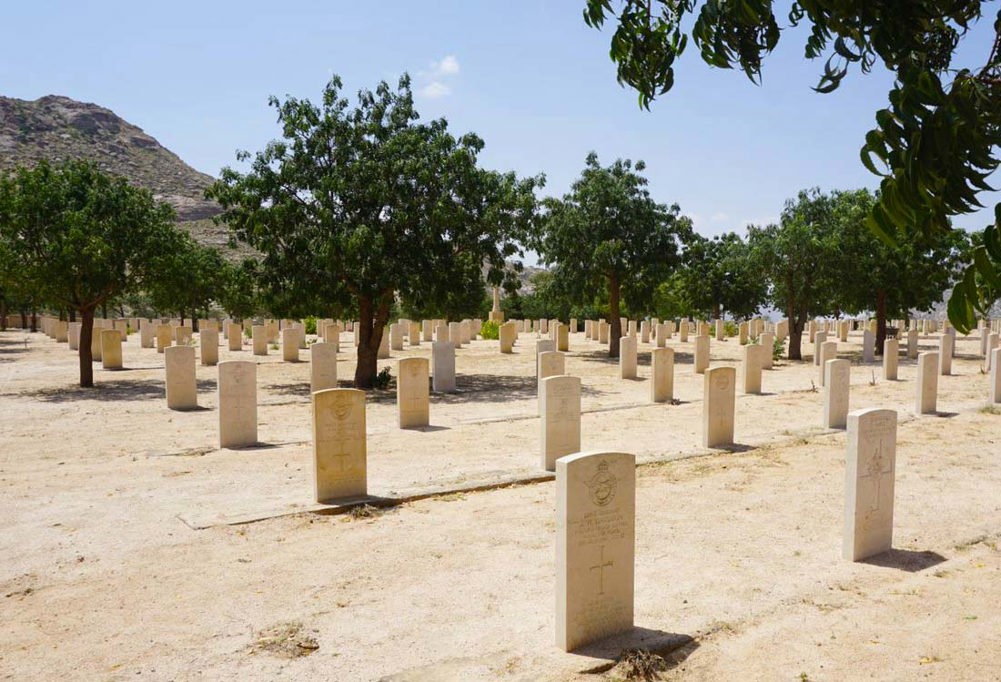
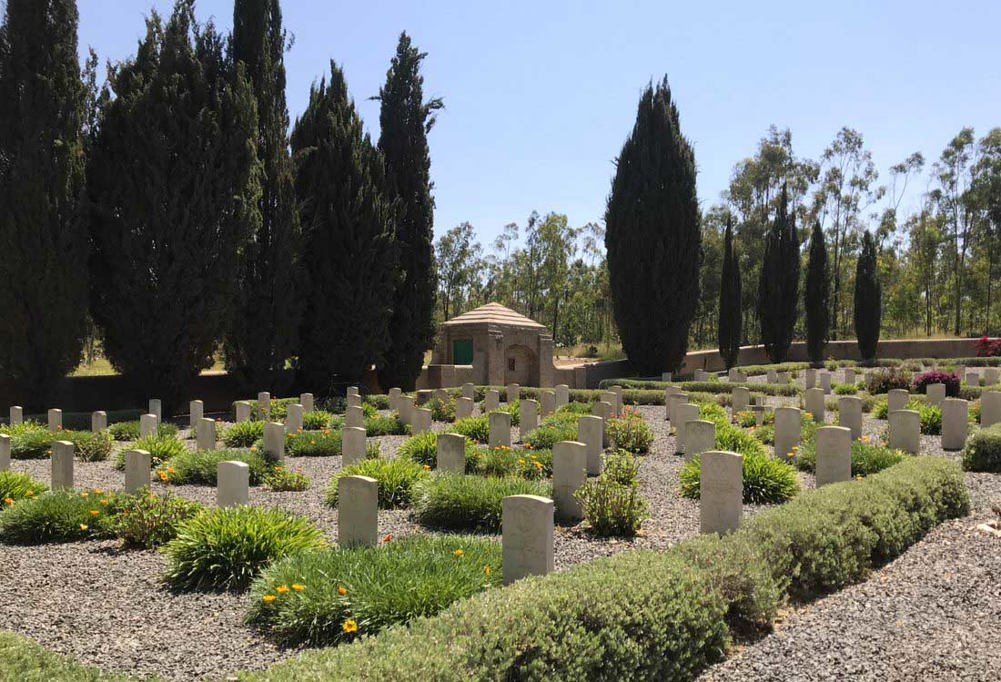
Despite the hot, dry weather, dotted horticulture is still possible in Keren.
Among them is Richhpal Ram VC who was posthumously awarded the highest military honour for his bravery during the battle.
“Just two hours away from Keren you find our other war cemetery in Eritrea,” said Rich Hills, CWGC’s regional director.
“In the country’s capital Asmara the environment is distinctly different. While Keren is arid and dry, in Asmara the air appears to have more moisture, the surrounding terrain is very wooded and green and there’s a large cactus forest behind the cemetery.”
The damper climate in Asmara makes it possible for vibrant plant life to survive.
Although water must always be managed carefully in Asmara, the difference in microclimate is very noticeable and our horticulture faces less of an uphill battle.
While the work of our dedicated team in Eritrea is varied and far from common knowledge, it’s also far from finished.
We constantly look forward to ways in which we can increase the standards of maintenance at these remarkable sites.
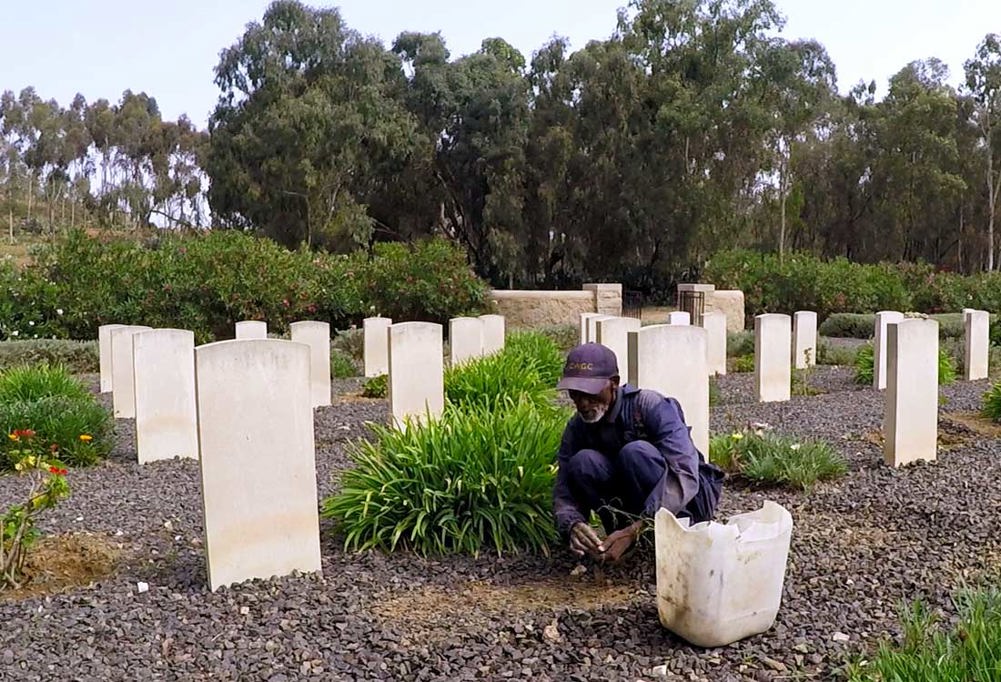
The stark difference between Asmara (pictured) and Keren is seen in the different planting schemes.
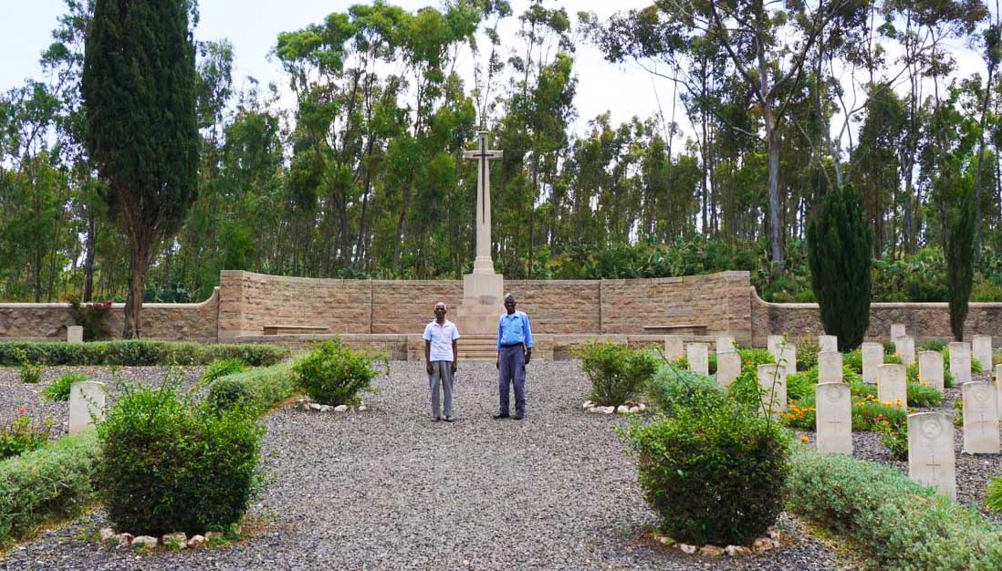
Two of our long-term dedicated teams in Eritrea next to Asmara War Cemetery's Cross of Sacrifice.
Location information
The small town of Keren is about 90 kilometres west of Asmara.
Keren War Cemetery is 2 kilometres west of the town. The site, on top of the famous Keren pass and overshadowed by Cameron's Ridge on the opposite side of the road, was presented by the Chief and the Community of Ad Hadembas, and an inscription recording this has been built into the cemetery wall.
Visiting information
ARRIVAL
The route to the cemetery is signposted.
PARKING
There is an expansive area at the front of the cemetery, where multiple vehicles can park. The ground is compacted soil and sand.
ACCESS, LAYOUT AND MAIN ENTRANCE
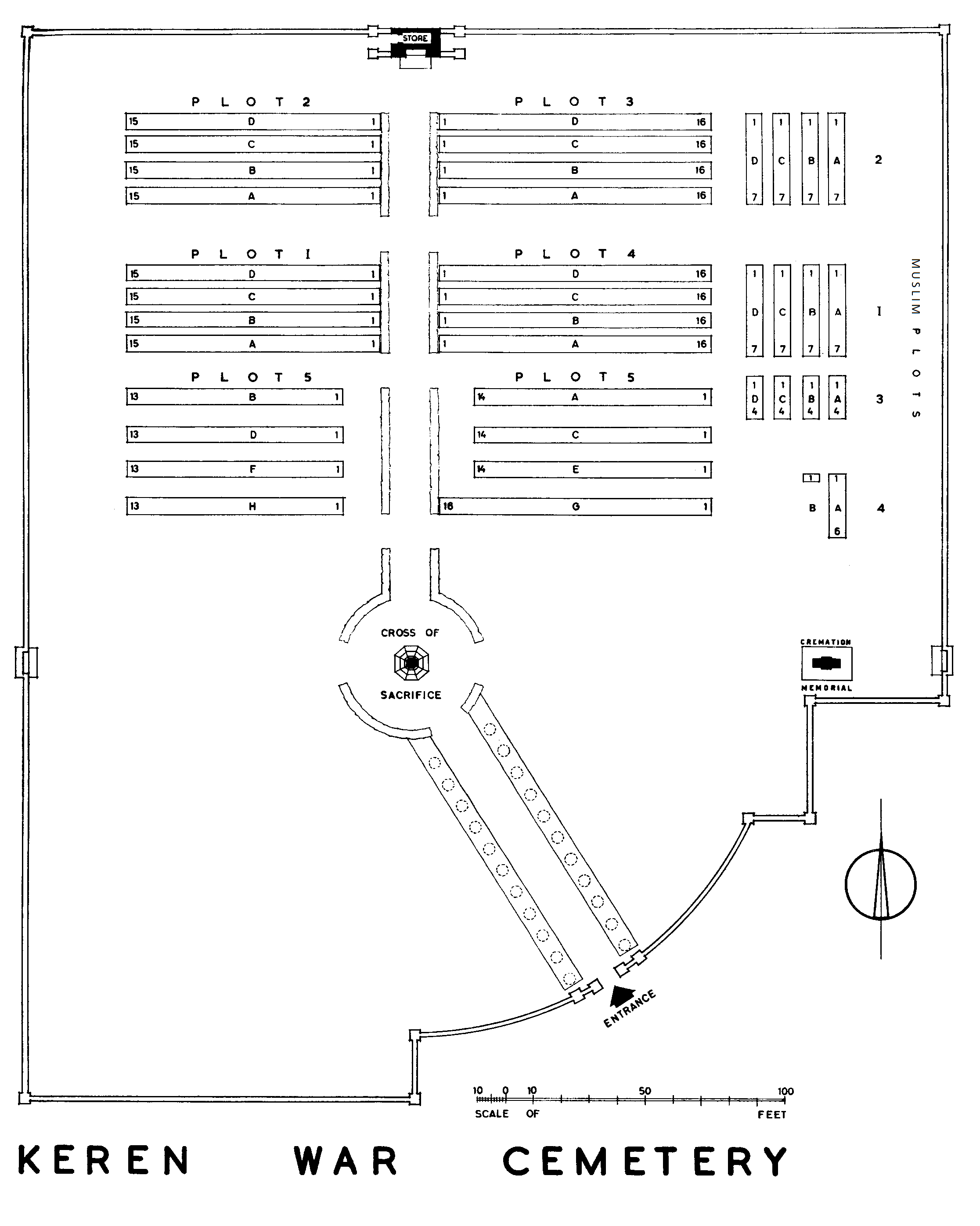
The cemetery is a rectangular shape with a stone wall surrounding the site. The entrance is located on the southern boundary in a curved section of the wall.
The main entrance gate is a mid-level (thigh height) double metal gate approximately 1.5 metres wide. The gate opens inwards into the cemetery. A concrete ramp leads up to the gate, with a small stone gate stopper in the centre of the gate opening. The sides of the ramp do not have handrails and there is a drop off on either side up to 100mm.
All internal paths are a gravel, sand or an aggregate surface, the ground is flat. The gravel pathways are bound on either side by stone kerbs up to 100mm above the gravel surface and up to 200mm drop from the kerbs outside the paths.
The Cross of Sacrifice is in the centre of the cemetery.
The Keren Cremation Memorial is on the east side of the cemetery, to the right of the Cross of Sacrifice.
All internal paths are gravel or sand, and the ground is flat.
There are seating alcoves with stone benches built into them against the boundary wall of the cemetery in line with the Cross of Sacrifice and Cremation Memorial.
The Register Box is inside a covered stone seating alcove at the north side of the cemetery, in line with the Cross of Sacrifice.
ALTERNATIVE ACCESS
There are no alternative entrances or access routes into the cemetery.
ADDITIONAL INFORMATION
The cemetery is open Monday to Friday 0600 hrs to 1800 hrs.
Visitors arriving in Asmara are advised that an official travel permit is required before attempting to travel to Keren. This can be obtained from the Ministry of Tourism Information Office. If intending to also visit the battlefield, which lies just 1km to the south west of Keren War Cemetery, a second travel permit is required for Tinquilahas.
These travel permits should be applied for at the same time, before leaving Asmara. The process generally takes a day. It is not possible to obtain a travel permit to visit the Tinquilahas battlefield once in Keren.
History information
Keren was the last Italian stronghold in Eritrea and the scene of the most decisive battle of the war in East Africa in February and March 1941.
Guarding the entrance from the western plains to the Eritrean plateau, the only road passing through a deep gorge with precipitous and well fortified mountains on either side, Keren formed a perfect defensive position. On these heights the Italians concentrated some 23,000 riflemen, together with a large number of well sited guns and mortars. A preliminary assault by United Kingdom and Indian troops was repulsed after a week of bitter fighting, although they gained and held a valuable position on Cameron's Ridge, on the left of the road.
The final battle began a month later. After ten days of gruelling combat the Commonwealth troops succeeded in forcing their way through the seemingly impregnable defences on the ridge and finally through the 200 metre long road block which the Italians had blasted at the narrowest point in the pass. Keren was taken on 27 March. The defeated Italian force retreated in some disarray to Asmara, which fell to Commonwealth forces on 1 April, and the Italian surrender was taken at the port of Massawa on 8 April.
KEREN WAR CEMETERY contains 440 Commonwealth burials of the Second World War, 35 of them unidentified.
The KEREN CREMATION MEMORIAL stands within the cemetery and commemorates 285 Sikh and Hindu soldiers from India and Pakistan killed on the Keren battlefield during the Second World War, whose remains were cremated in accordance with their faith. Three East African soldiers are also commemorated on the memorial.